Illustration (click to hide):
Project Description
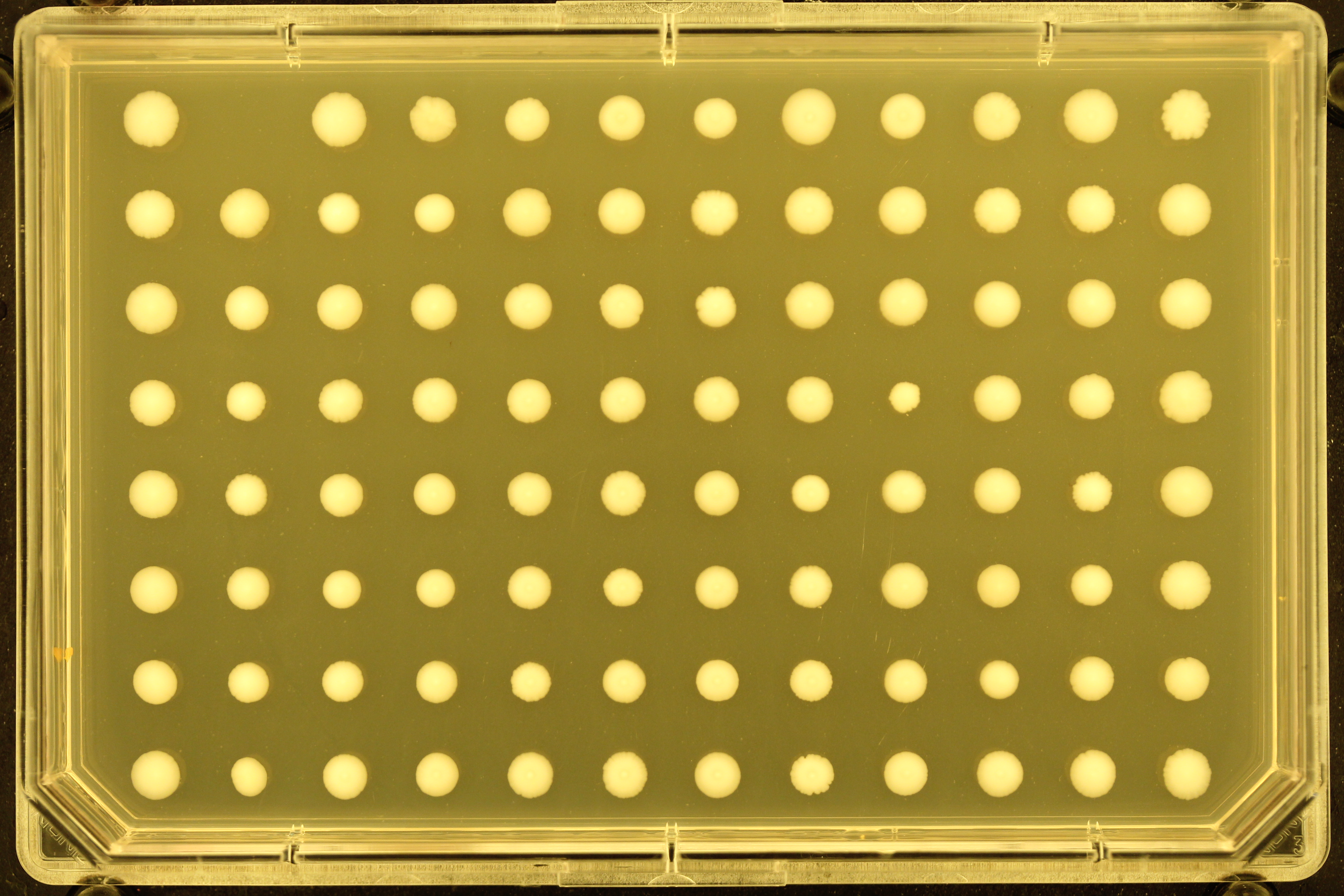
This project aimed to develop an automated image analysis pipeline for a genome-wide yeast screen designed to identify mutants sensitive to fatty acids. The screen involved spotting yeast mutant arrays on media containing different types of fatty acids.
The central part of the project was the development of a robust, automated segmentation and quantification pipeline that measured colony surface area as a proxy for growth.
Key components of the image analysis pipeline included:
• Automated colony segmentation from plate images
• Accurate quantification of colony surface area
• Data processing and statistical analysis to identify significant growth defects
• Scalability to handle larger, high-density arrays
This automated approach accelerated the screening process and enabled rapid identification of potential hits. The pipeline’s adaptability also made it useful beyond this project, allowing it to be applied to future screening and Synthetic Genetic Array (SGA) projects in the lab and potentially by other researchers in the yeast genetics community.
Overall, the project provided a framework for identifying mutants involved in fatty-acid sensitivity and contributed tools for large-scale phenotypic screening. The results offered potential insights into lipid metabolism, cellular adaptation to fatty acid exposure, and mechanisms of lipotoxicity, contributing to a broader understanding of fundamental biological processes and their relevance to human health.
Project Information
-
BIIF Principal Investigators
- Kristina Lidayova
External Authors
Clara Pohlen , Victoria Menendez Benito, -
Date
2025-02-12 🠚 Current - GitHub page